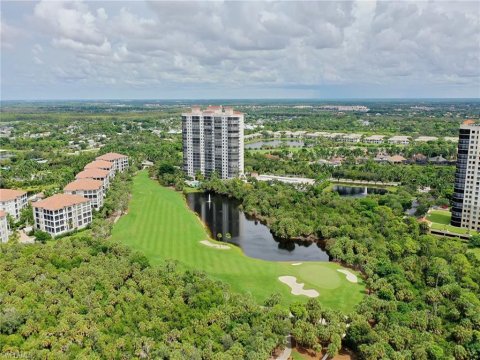
The Estero Village Council's annual workshop outlined significant new residential and commercial development. Here is what those pipeline numbers mean for local buyers and sellers.
When buyers look at Southwest Florida, Estero often stands out for its balanced lifestyle. Positioned directly between the established luxury markets of Naples and the commercial hub of Fort Myers, Estero has spent the past decade carefully shaping its identity.
At the Estero Village Council’s recent annual workshop, village leadership laid out a clear look at what lies ahead. Currently moving through the development pipeline are approximately 2,900 residential units, two hotels, a 23-story luxury residential tower, and roughly 300,000 square feet of commercial and retail space.
For anyone looking to buy or sell property in Estero, these numbers are more than just municipal line items. They signal how everyday life, traffic patterns, and property values will shift across our local corridors over the next several years.
A Shifting Architectural and Lifestyle Landscape
Historically, much of Estero’s residential landscape has been defined by horizontal master-planned communities—gated golf enclaves, low-rise carriage homes, and single-family neighborhoods tucked along Corkscrew Road and US-41.
The presence of a 23-story luxury residential tower in the development pipeline marks an evolution toward vertical living and high-density luxury that Estero has not traditionally seen outside of immediate coastal pockets. Alongside two planned hotels and 300,000 square feet of commercial square footage, the Village is leaning into walkable, amenity-dense lifestyle concepts.
Rather than spreading unchecked into rural land, much of this incoming development focuses on infill parcels and designated commercial nodes, designed to bring dining, high-end services, and boutique retail closer to existing neighborhoods.
What Buyers Need to Evaluate Today
If you are evaluating homes in Estero today, understanding where these projects sit relative to your prospective neighborhood is critical. Development brings world-class conveniences, but it also alters the immediate environment.
Here is how I help my buyers evaluate their options in light of the pipeline:
Traffic Corridors and Daily Commutes: Understanding where 2,900 residential units will feed onto primary arteries like US-41, Corkscrew Road, and Via Coconut Point helps you anticipate future peak-hour flow before committing to a location. Proximity to New Commercial Hubs: For buyers who want to walk or take a golf cart to upscale dining and retail, purchasing near emerging mixed-use nodes is an advantage. For those prioritizing seclusion and quiet preserves, selecting communities buffered from commercial corridors is key. Existing Communities vs. New Construction: Established communities like West Bay Club, Pelican Sound, Grandézza, or Shadow Wood offer mature landscaping, fully funded club amenities, and predictable environments. In contrast, new developments bring contemporary floor plans and modern architectural styles, but often come with multi-year construction timelines nearby.
Choosing the right neighborhood requires weighing immediate quiet against long-term convenience.
What This Means for Estero Sellers
If you already own a home in Estero, the Village’s planned expansion reinforces strong, sustained regional interest.
Commercial investment at this scale does not happen in a vacuum. Developers and hotel brands invest hundreds of millions of dollars only after rigorous demographic and economic forecasting. The commitment of 300,000 square feet of commercial space and high-end hospitality projects validates Estero as an enduring destination rather than just a pass-through between Naples and Fort Myers.
For existing homeowners, this means:
Sustained Baseline Demand: Continued municipal and private investment keeps Estero high on the relocation list for buyers moving from out of state. Increased Local Amenities: As retail and culinary options expand, homeowners benefit from improved quality of life without having to drive south into Naples or north into downtown Fort Myers for an evening out. The Need for Sharp Positioning: As new luxury inventory eventually comes to market, sellers in established gated communities must highlight the distinct advantages of their properties—established governance, mature private golf and tennis facilities, and proven community character.
Planning Your Next Move
Growth in Southwest Florida is rarely accidental; in Estero, it is guided by deliberate municipal planning. Whether you are searching for a quiet fairway retreat or looking to position your current home in a shifting market, understanding what is planned on the ground gives you a decisive advantage.
If you would like to discuss how specific development projects may impact your community or your property search, I would be glad to share my perspective.

Anna Borden Taylor
Global Real Estate Advisor, The Westerlund Team at Premier Sotheby's International Realty